Introduction
A young couple walked into a jewellery store with a budget of $5,000. They wanted a beautiful diamond ring but were worried about the high price. After some research, they chose a lab-grown diamond ring. In the end, they got a bigger and better ring—and still saved thousands of dollars.
This is why lab-grown diamonds are becoming very popular in 2026.
Lab-grown diamonds look the same as natural diamonds. They have the same shine, same strength, and same beauty. The big difference is the price. Lab-grown diamonds are usually 40% to 90% cheaper than natural diamonds. They are also often seen as a more modern and ethical choice.
In this guide, you will learn step-by-step how to buy a lab-grown diamond ring. By the end, you will know how to choose the right diamond, save money, and avoid common mistakes.
Step 1: Learn the Basics of Lab-Grown Diamonds
What Makes Lab-Grown Diamonds the Same as Natural Ones
Lab-grown diamonds are real diamonds. They are made from carbon, just like natural diamonds. They have the same physical, chemical, and optical properties.
The only difference is where they come from:
Natural diamonds form under the earth
Lab-grown diamonds are created in a lab
Both can be certified by trusted labs like IGI or GIA.
How Lab Diamonds Are Made (CVD vs HPHT)
There are two main methods:
HPHT (High Pressure High Temperature): Copies how diamonds form in nature
CVD (Chemical Vapour Deposition): Grows diamonds layer by layer
Both methods create high-quality diamonds. Most modern diamonds are made using CVD.
Top Facts to Know Before You Buy
Lab-grown diamonds are 40%–90% cheaper than natural ones
Prices have dropped a lot in the last 10 years due to better technology
They are now widely available in many shapes and sizes
Benefits of Lab-Grown Diamonds
Lower price
Same beauty and sparkle
Widely available
Considered more ethical than mined diamonds
Real Example
A buyer chose a 1.5-carat lab-grown diamond ring for around $3,500.
A similar natural diamond would cost over $10,000.
Result: Same look, big savings.
Step 2: Set Your Budget and Style Goals
Figure Out Your Budget
Before you start shopping, decide how much you want to spend.
Typical costs:
Diamond: $1,000 to $5,000
Ring setting: $500+
Extra costs: taxes, insurance
Hidden Costs to Consider
Many buyers forget these:
Ring resizing
Insurance
Maintenance
Always keep a small extra budget for these.
Pick Your Ring Style
Popular styles include:
Solitaire: Simple and classic
Halo: Extra sparkle around the center stone
Vintage: Unique and detailed
Three-stone: Symbolic design
Choose the Right Metal
Platinum: Strong and long-lasting
White gold: Looks like platinum but costs less
Yellow gold: Classic style
Rose gold: Modern and trendy
Match Style With Lifestyle
If the ring will be worn daily:
Choose durable metal
Avoid very delicate designs
Simple Budget Example
If your budget is $4,000:
Spend ~$3,200 on diamond
~$800 on setting
Pro Tips to Save Money
Stay slightly under budget
Look for seasonal sales
Focus on value, not just size
Step 3: Master the 4Cs of Diamonds
The 4Cs decide the quality and price of a diamond.
Cut: Most Important for Sparkle
Cut affects how much a diamond shines.
Best options:
Excellent
Ideal
Always prioritise cut for maximum sparkle.
Color: How White the Diamond Is
Color scale goes from D (best) to Z.
Good choices:
D–F: Very white (premium)
G–H: Slight color but better value
Clarity: Small Imperfections
Clarity shows how clean the diamond is.
Best value:
VS1 or VS2
These look clean to the eye.
Carat: Size of the Diamond
1–2 carats is most popular
Bigger size = higher price
Balance the 4Cs
Smart buyers balance quality and price:
Slightly lower color
Good clarity
High cut
Real Example
A buyer chose:
1.8-carat diamond
Slightly lower color
Result:
Bigger diamond
Stayed within budget
Use online tools:
Zoom images
360° videos
Filters
Step 4: Find a Trusted Seller and Compare
Online vs Store Buying
Online:
Better prices
More options
In-store:
See the ring in person
Personal help
How to Check a Trusted Seller
Look for:
Certification (IGI or GIA)
Good reviews
Clear return policy
Compare Prices Carefully
Steps:
Shortlist 2–3 sellers
Compare same diamond specs
Check total cost
Watch for Red Flags
Avoid sellers who:
Do not provide certification
Offer prices that seem too low
Pressure you to buy fast
Questions to Ask
Is there a warranty?
Can I return the ring?
Do you offer resizing?
Step 5: Seal the Deal and Verify Quality
Customise Your Ring
You can:
Choose your design
Add engraving
Select band style
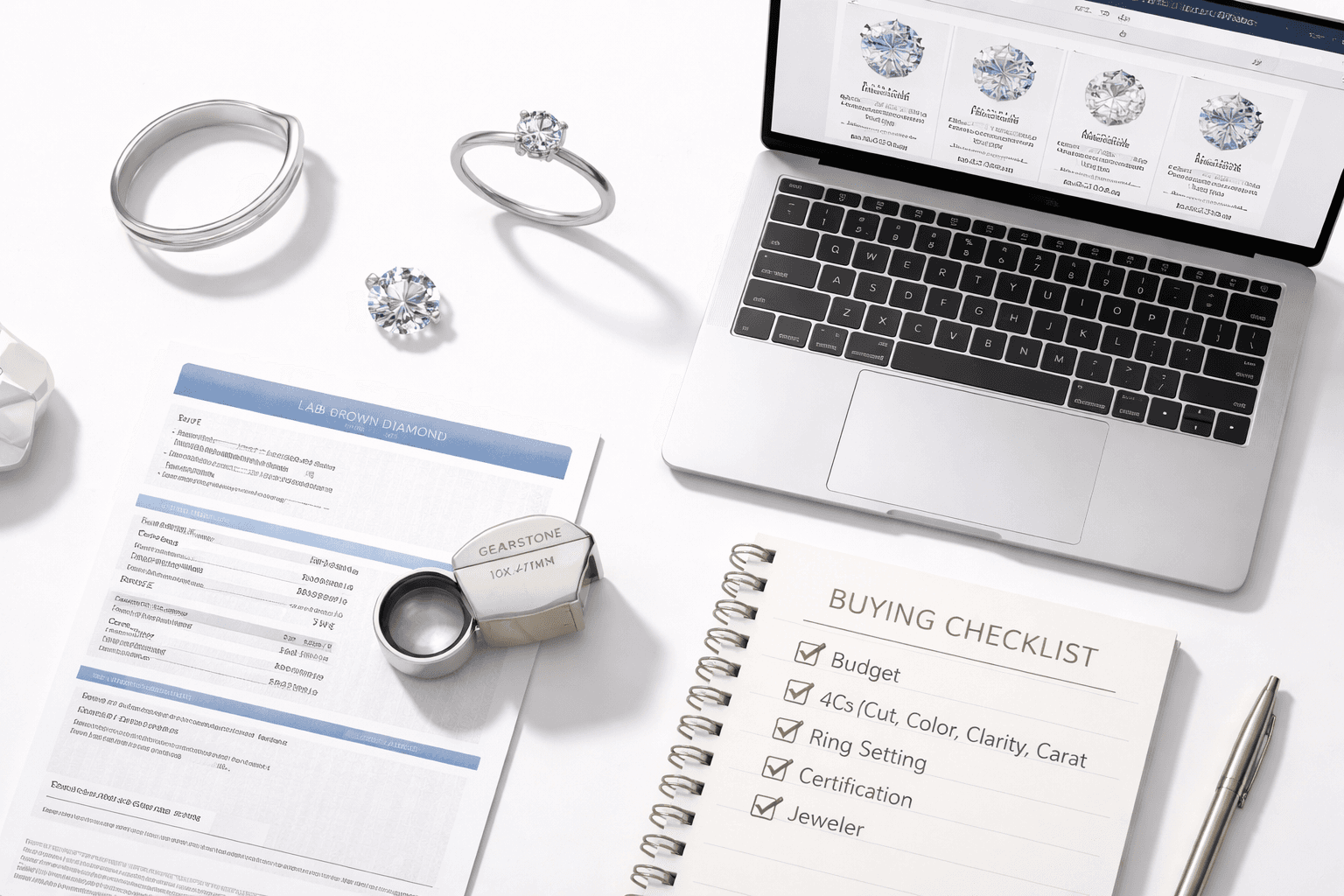
Final Checklist Before Buying
Certification verified
Price confirmed
Return policy checked
Inspect Your Ring
After buying:
Check the diamond under light
Look for any issues
Get Insurance
Insurance protects your ring from:
Loss
Damage
Theft
Care Tips
Clean your ring monthly
Store it safely
Avoid harsh chemicals
Resale Reality
Lab-grown diamonds:
Usually resell for less than original price
Value depends on market demand
Common Mistakes to Avoid
Not checking certification
Choosing size over quality
Not comparing sellers
Ignoring return policy
Falling for fake discounts
Conclusion
Buying a lab-grown diamond ring is simple if you follow the right steps:
Learn the basics
Set your budget
Understand the 4Cs
Compare sellers
Verify before buying
Lab-grown diamonds give you great value, beauty, and modern choice. You can get a stunning ring without spending too much money.