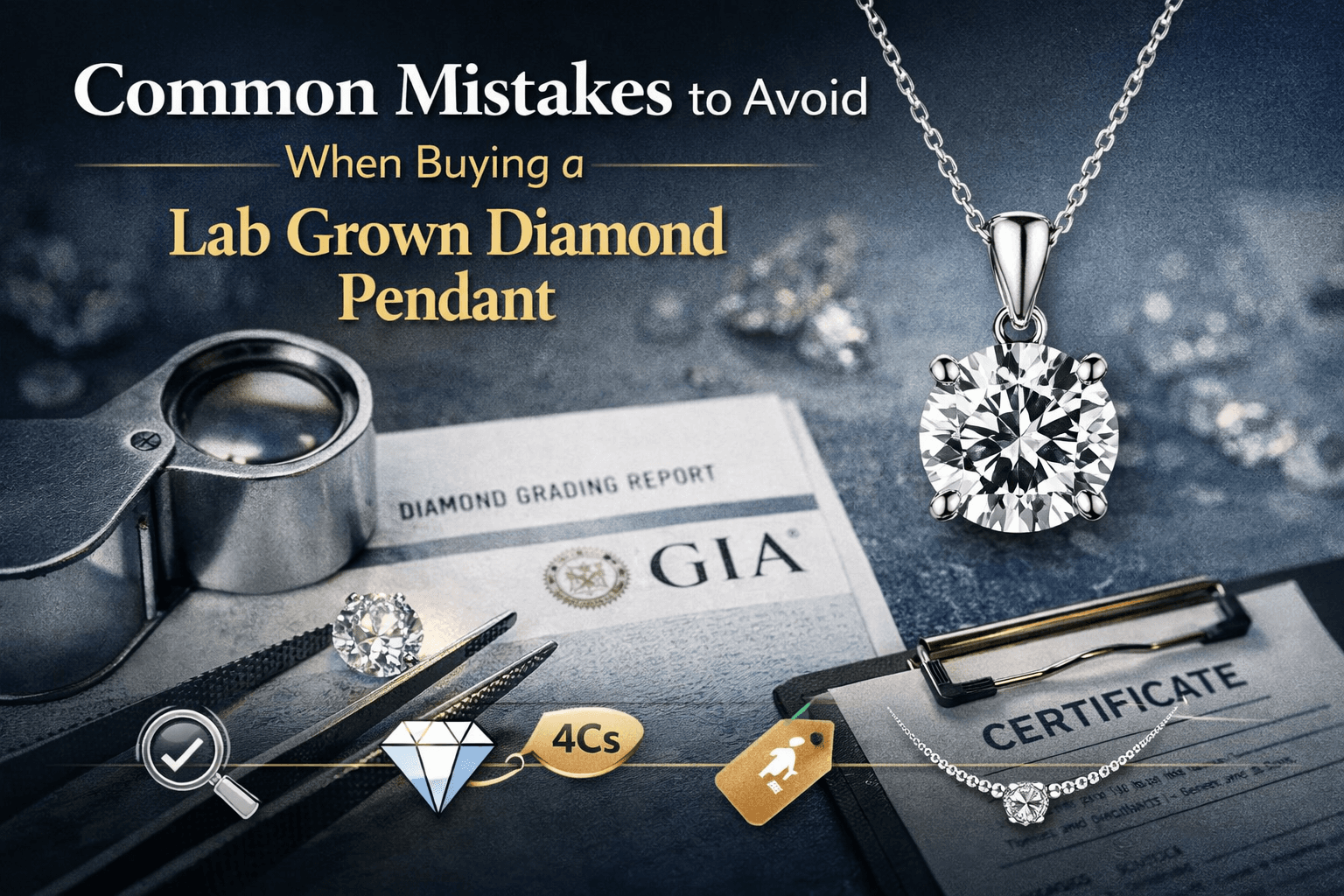
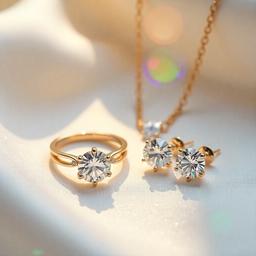
Lab grown diamond pendants are becoming a popular choice in India. They offer the same sparkle, strength, and beauty as natural diamonds, but at a more affordable price. Many buyers also like them because they are made without traditional mining.
However, buying a lab grown diamond pendant without proper knowledge can lead to mistakes. Some buyers focus only on price, while others skip important checks like certification or setting quality.
This guide explains the most common mistakes to avoid so you can make a smart, confident purchase.
Not Understanding What Lab Grown Diamonds Really Are
Confusing Lab Grown Diamonds with Fake or Imitation Stones
One of the biggest mistakes buyers make is thinking lab grown diamonds are fake.
They are not cubic zirconia or moissanite.
Lab grown diamonds are real diamonds. They have the same chemical makeup, hardness, and sparkle as mined diamonds. The only difference is their origin — they are grown in a laboratory instead of deep inside the earth.
Confusing lab grown diamonds with imitation stones can cause buyers to undervalue them or avoid them unnecessarily.
Believing Lab Grown Diamonds Are Lower Quality
Some people believe lab grown diamonds are weaker or less brilliant. This is incorrect.
A lab grown diamond:
Has the same hardness as a natural diamond
Can achieve the same cut, clarity, and color grades
Lasts just as long with proper care
Quality depends on the 4Cs, not on where the diamond was created.
Ignoring How Lab Grown Diamonds Are Certified
Lab grown diamonds are certified separately and clearly labelled as “laboratory-grown.”
Ignoring this information may cause confusion at the time of purchase or resale. Always ensure the diamond’s origin is clearly mentioned in its grading report.
Ignoring the 4Cs When Choosing a Lab Grown Diamond Pendant
Overlooking Cut Quality and Its Impact on Sparkle
Many buyers focus mainly on carat weight, but cut quality matters the most.
A well-cut diamond reflects light properly and sparkles more. Even a smaller diamond can look stunning if the cut is good.
For pendants, good cut quality helps the diamond shine even in low or indoor lighting.
Choosing Carat Weight Over Overall Balance
Bigger diamonds are attractive, but size alone should not decide your purchase.
A large diamond with poor cut or clarity may look dull. A balanced combination of size, cut, and clarity usually gives the best look for pendants.
Not Paying Attention to Color and Clarity Grades
Color and clarity affect how clean and bright a diamond looks.
Near-colorless diamonds often look white to the eye and offer better value. Minor inclusions are usually invisible without magnification, especially in pendants.
Ignoring these grades may lead to overpaying.
Focusing Only on Price Instead of Overall Value
Falling for Extremely Low Prices Without Verification
Very low prices can be a warning sign.
They may indicate:
Poor diamond quality
Missing certification
Incorrect product information
A genuine lab grown diamond still has a production cost and should come with proper documentation.
Ignoring Certification to Save Money
Some buyers skip certification to reduce cost. This is a risky mistake.
Without certification, you cannot be sure about the diamond’s quality or authenticity. Certified diamonds are also easier to insure or resell later.
Not Comparing Value Across Different Sellers
Prices for lab grown diamond pendants vary across sellers in India.
When comparing finished jewellery and loose diamond pendants, buyers should also consider setting quality, metal purity, and after-sales support — not just the price tag.
Choosing the Wrong Pendant Design for Daily Use
Selecting Delicate Designs That Are Not Durable
Some pendants look beautiful but are too delicate for regular wear.
Thin prongs or weak settings can loosen over time and increase the risk of stone loss, especially for daily-use jewellery.
Ignoring Lifestyle and Wear Frequency
If you plan to wear your pendant every day, choose a design that can handle movement and contact.
Designs made for occasional wear may not suit daily use.
Picking Trendy Styles Without Thinking Long Term
Trendy designs can go out of fashion quickly.
Classic pendant styles usually:
Match more outfits
Feel timeless
Work well for daily and special occasions
Overlooking Metal Choice and Setting Quality
Choosing the Wrong Metal for Your Skin Tone and Budget
Gold, white gold, platinum, and silver all have different looks and maintenance needs.
Some metals are stronger for daily wear, while others need more care.
Ignoring the Strength of the Pendant Setting
The setting keeps the diamond secure.
A strong, well-made setting is especially important for pendants, as they move freely on the chain throughout the day.
Not Checking Prong or Bezel Security
Loose prongs or poor finishing can lead to damage or stone loss.
Always inspect how firmly the diamond is held.
Not Checking the Certification and Grading Report
Buying Without Trusted Certification (IGI, GIA, etc.)
Reputed laboratories like IGI and GIA provide reliable grading reports for lab grown diamonds.
A proper certificate confirms:
Diamond origin
4Cs
Authenticity
Not Matching the Diamond with Its Certificate
Each certified diamond has a unique report number.
Always ensure the diamond matches its certificate to avoid mistakes or misrepresentation.
Ignoring Important Details in the Grading Report
Many buyers only check carat weight.
Details like polish, symmetry, and fluorescence also affect the diamond’s appearance and value.
Forgetting About Chain Quality and Length
Choosing a Chain That Is Too Thin for the Pendant
A heavy pendant on a thin chain can cause breakage.
The chain should be strong enough to safely support the pendant’s weight.
Selecting the Wrong Chain Length for Necklines
Chain length affects comfort and appearance.
Choosing the right length helps the pendant sit properly on your neckline.
Not Matching Chain Metal with Pendant Metal
Using different metals may cause uneven wear and look mismatched.
Matching metals give a cleaner and more polished finish.
Ignoring Brand Reputation and After-Sales Support
Buying from Unverified or Unknown Sellers
Unknown sellers may not follow proper grading or disclosure standards.
This increases the risk of incorrect information or poor-quality jewellery.
Not Checking Return and Exchange Policies
Clear return and exchange policies protect you if something goes wrong.
Always read these terms before purchasing.
Overlooking Warranty and Buyback Options
Some jewellers offer warranties, upgrades, or buyback options.
Ignoring these benefits can limit your future choices.
Not Considering Future Upgrades or Resale Options
Ignoring Upgrade Programs Offered by Brands
Many buyers later want to upgrade their jewellery.
Choosing a brand that offers upgrade options gives more flexibility.
Assuming All Lab Grown Diamonds Have the Same Resale Value
Lab grown diamonds usually have lower resale value than mined diamonds.
Understanding this helps set realistic expectations from the start.
Not Keeping Purchase Documents Safe
Certificates and invoices are important for resale, insurance, or upgrades.
Losing them reduces the diamond’s value.
Skipping Proper Research Before Making the Final Purchase
Not Comparing Online and Offline Options
Both online and offline jewellery stores in India have advantages.
Comparing both helps you understand pricing, quality, and service differences.
Ignoring Customer Reviews and Real Buyer Feedback
Reviews often reveal important details about product quality and service experience.
Ignoring them can lead to poor decisions.
Making Impulse Decisions Without Expert Advice
Diamond jewellery is a long-term purchase.
Taking time to research and ask questions leads to better outcomes — whether you’re buying diamonds or comparing other gemstone pendants in India.
Final Thoughts: How to Buy a Lab Grown Diamond Pendant the Smart Way
Quick Checklist to Avoid Common Buying Mistakes
Understand what lab grown diamonds really are
Always check the 4Cs
Buy only certified diamonds
Choose strong settings and suitable designs
Purchase from trusted sellers
Tips for First-Time Lab Grown Diamond Buyers
Take your time, compare options, and don’t hesitate to ask questions. A well-chosen lab grown diamond pendant can be a beautiful and meaningful piece when bought with care and knowledge.